
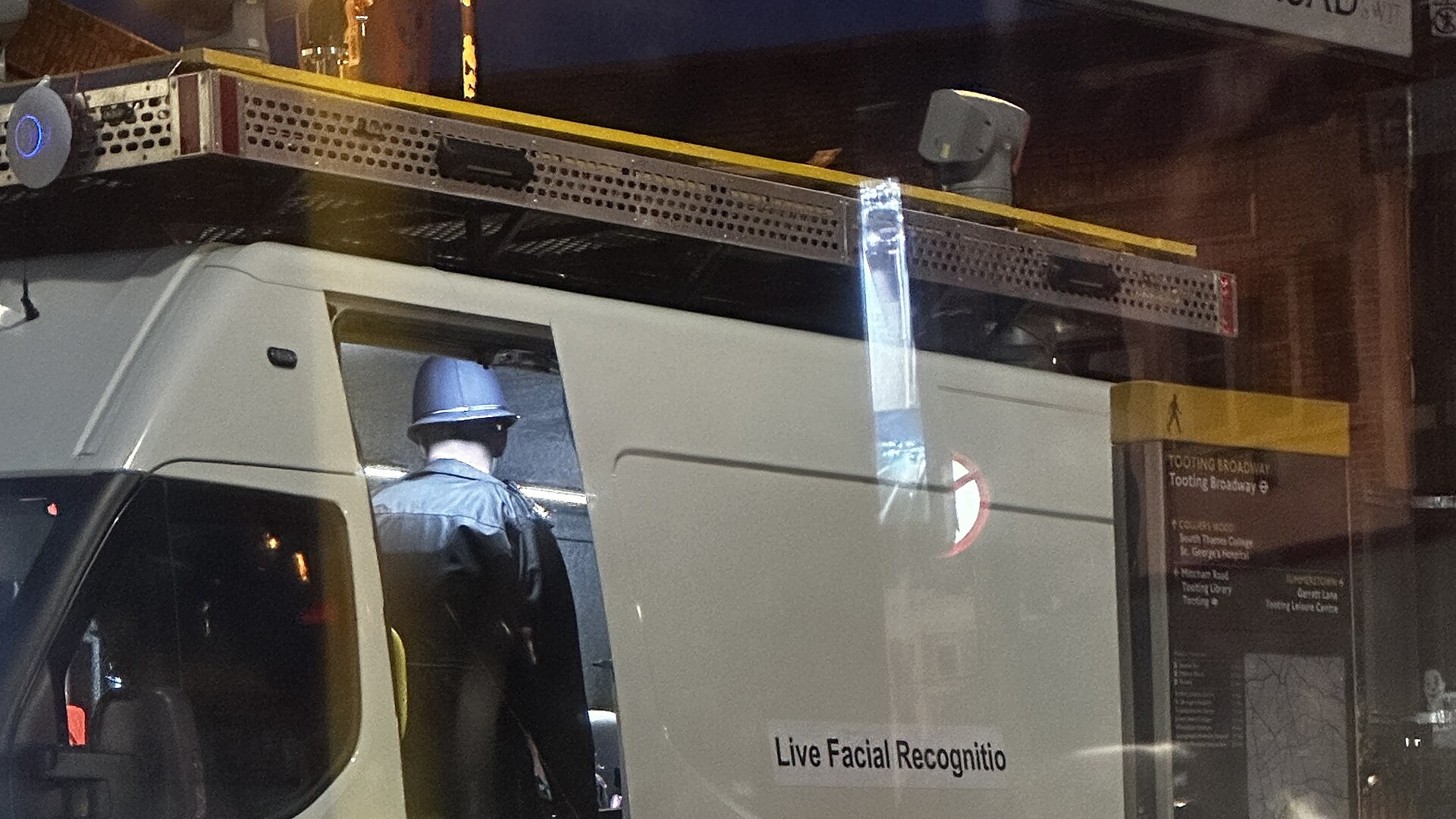
Photo: a Metropolitan Police live facial recognition van in Tooting, by Secretlondon / Wikimedia Commons (CC BY-SA 4.0)
The company behind most of the face-scanning cameras in British shops now says it wants the government to regulate it. Facewatch, whose system runs in Sainsbury's, B&M, Sports Direct and more than 125 other UK retail outlets, has told the Home Office it backs tighter rules for private live facial recognition, with a "high bar" for anyone who wants to use it. On Tuesday 27 October, people who say they were wrongly flagged by these systems are due to tell their stories at a summit in Parliament.
Six months, nearly 300,000 alerts
The scale is larger than most shoppers realise. Facewatch itself says its network sent 297,433 real-time alerts to UK retailers between January and June 2026, each one telling staff that someone on its watchlist had just walked through the door. That works out at well over 1,600 alerts a day.
The system works in a simple way. Cameras at the entrance capture the face of every person who comes in. Each face is turned into a biometric template and checked against a shared watchlist of people that staff at any store in the network have flagged as suspected offenders. A match is reviewed by a human operator before an alert reaches the shop floor. Facewatch says the images of people who are not on the list are deleted straight away.
Sainsbury's has been the biggest new customer. The supermarket has put Facewatch into dozens of branches and has said it plans to extend it much further before the end of 2026.
No law written for shops
There is no Act of Parliament that deals specifically with facial recognition in shops. Retailers rely on the UK General Data Protection Regulation and the Data Protection Act 2018, which demand a lawful reason for processing biometric data and a sign at the door telling customers the cameras are there. There is no licensing scheme, no body that approves a deployment before it starts, and no way to opt out other than not going into the shop.
Police use is not in much better shape. The Home Office ran a consultation from 4 December 2025 to 12 February 2026 on a new legal framework for facial recognition and other biometric tools, including a single regulator with binding codes of practice. More than eight months later, the government has still not published its response. The Biometrics and Surveillance Camera Commissioner, Professor William Webster, argued in his reply that any new rules should cover private businesses doing crime-prevention work, not just the police.
Why the market leader wants rules
On the face of it, a company asking to be regulated sounds like good news. A Facewatch spokesperson told TechRadar the firm hoped government standards would make it harder for "less-scrupulous operators" to enter the market.
Critics see a second motive. Facewatch already acts as the data controller for its whole retail network, holds a certificate under the international standard for AI management systems, and has years of operating data. A demanding licensing regime would be easiest to meet for the company that is already built for it, and hardest for a newcomer. Rules written with heavy input from the market leader could end up protecting its position as much as protecting shoppers.
The people on the wrong end
Big Brother Watch, the civil liberties group, says a growing number of people are coming to it after being wrongly identified, turned away from shops or told they cannot be served. Several have described having to send a passport or other identification to a private company simply to prove they were not on its list. The group's petition calling for a halt to in-store facial recognition until Parliament passes proper legislation has passed 42,000 signatures, and its summit on 27 October is meant to put those accounts directly in front of MPs and peers.
Shop theft is a real problem, and shop workers deserve protection from abuse and violence. But a watchlist compiled by private businesses, checked against every customer's face, with no independent approval and no right to object at the door, is a serious power to hand to the high street. Whatever rules the Home Office finally writes, they need to be shaped by the public who walk past these cameras, not only by the companies that sell them.

 244.47 SRY